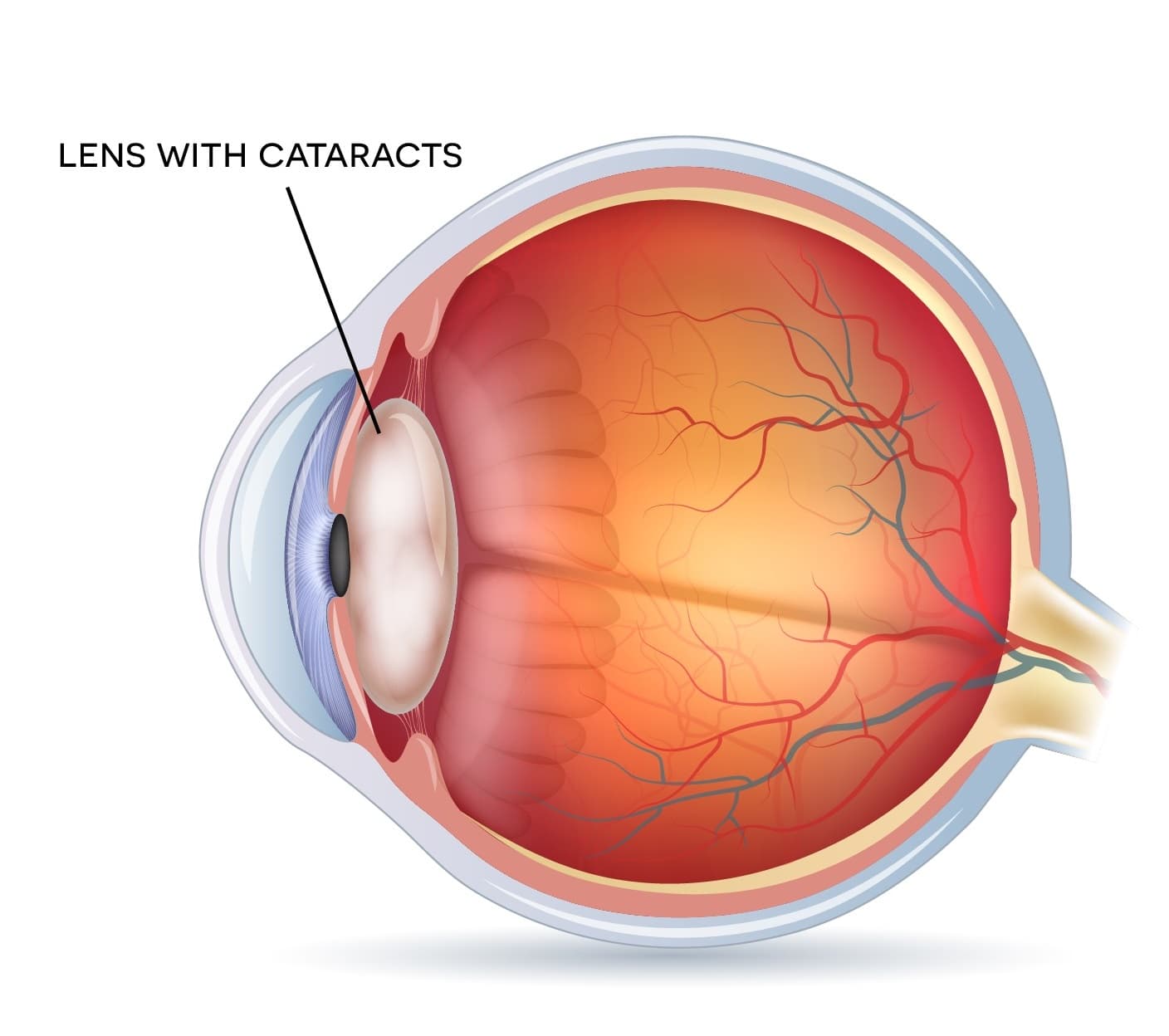
What do you understand by Cataract ?
A Cataract is an eye condition characterized by the clouding of the natural lens in the eye, leading to vision loss. Naturally, the eye's lens is clear and allows light to pass through, focusing on the retina at the back of the eye. But when a cataract develops, the lens becomes cloudy and interferes with the normal passage of light.
What's Your Speciality
Nuclear Sclerotic Cataracts
This is the most common type, affecting the center of the lens. It is associated with aging and causes a gradual yellowing or browning of the lens.
Cortical Cataracts
These occur in the lens cortex, the part of the lens that surrounds the central nucleus. They are characterized by wedge-shaped opacities that start at the periphery of the lens and work their way to the center.
Posterior Subcapsular Cataracts
These form at the back of the lens right in the path of light as it passes through the eye. They often progress faster than other types.
Congenital Cataracts
Some babies are born with cataracts or develop them in childhood, often in both eyes. These may be so small that they do not affect vision. If they do, the lenses may need to be removed.
Treatments for Cataract
Surgical Options
Phacoemulsification
A most common and modern technique for cataract eye surgery. It involves using ultrasound energy to break up the cloudy lens into small fragments, which are suctioned out of the eye.
Extracapsular Cataract Extraction (ECCE)
In this traditional method, the surgeon removes the entire lens in one piece. Phacoemulsification is more common today due to its smaller incisions and faster recovery.
Laser-Assisted Cataract Surgery
Surgeons sometimes use advanced laser technology to assist with specific steps in eye cataract treatment, enhancing precision and efficiency in cataract operation.
Intraocular Lens Options
- Monofocal IOLThis lens type provides clear vision at a single focal distance, typically for distance vision. Glasses may be needed for reading or other tasks.
- Multifocal IOLThese lenses are designed to provide clear vision at multiple distances, reducing the need for glasses after surgery.
- Toric IOLCorrects astigmatism in addition to cataracts.
- Accommodative IOLMimics the natural lens ability to shift focus between near and far distances.
World-Class Equipment
Advanced Phacoemulsification System
Latest generation cataract surgery platform ensuring enhanced safety, stability, and faster recovery times.
Discover TechnologyOptical Biometry
Contactless measurement of eye length and curvature for extremely accurate intraocular lens (IOL) power calculation.
Discover TechnologyHigh-End Surgical Microscopes
Superior visualization for complex surgeries with advanced depth of field and optimal illumination.
Discover Technology